

Made in Hawaiʻi — Why It Matters
Much of what is sold in Hawaiʻi is not made here. From Front Street in Lahaina to Poʻipū on Kauaʻi and Aliʻi Drive in Kailua-Kona, visitors are often surrounded by imported goods.
Tapa from Fiji. Fabrics and artwork from Indonesia. Trinkets from Thailand. Even for residents, much of what we consume — including food — is imported. If the barges stopped arriving for even a short time, the consequences would be immediate.
This dependence is not new. Since Hawaiians first entered cash economies during the sandalwood era, cycles of boom and collapse have repeated themselves. Farmers left their loʻi and gardens for quick income, and when those resources were exhausted, communities were left without sufficient food production.
Today, small farmers face a different challenge: how to turn traditional agriculture into viable commercial operations. Success often requires adding value to raw products — but that added value can also push prices beyond what distributors are willing to pay.
The result is a marketplace dominated by uniform, imported goods produced cheaply elsewhere.
That is why “Made in Hawaiʻi” matters. A resilient, locally rooted economy depends on supporting farmers, small businesses, and cultural practitioners. The more we choose to spend locally, the more independent and sustainable our islands become.
Taro: The Birth of Hawaiʻi
There is no product more deeply tied to Hawaiʻi than taro.
In Hawaiian tradition, kalo (taro) is the elder sibling of the Hawaiian people. According to the moʻolelo, the stillborn child of Wākea and Hoʻohōkūkalani was buried, and from that place grew the first taro plant, Hāloa. The next child, also named Hāloa, became the ancestor of the Hawaiian people.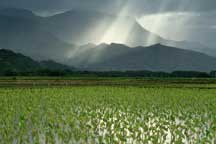
This connection places taro at the center of Hawaiian identity.
Taro (Colocasia esculenta) is one of the oldest cultivated crops in the world and is grown throughout Polynesia, Asia, and beyond. In Hawaiʻi, it has long been a staple food and a foundation of community life.
Understanding taro is also a way of understanding Hawaiian values. The ʻohana (family) is reflected in the plant itself: the corm represents the parent, while the offshoots — the ʻohana — grow outward from it.
Farming Traditions Across the Islands
 Historically, taro was cultivated across the Hawaiian Islands, especially in the fertile windward valleys. Waipiʻo Valley remains one of the most important taro-growing regions today.
On drier leeward sides, farmers developed upland (dryland) taro systems. In Kaʻū, for example, Waiohinu was a center of production, supported by irrigation from mountain springs.
Both wetland and dryland systems supported a wide variety of taro, each producing poi with distinct colors and flavors.
The Rise of the Poi Industry
The cultural resurgence of the 1970s brought renewed attention to taro and poi, and many families expanded into commercial production.
The late Clarence Medeiros Sr. of South Kona built one of the largest poi operations on Hawaiʻi Island. His family’s experience reflects the broader shift from subsistence farming to commercial enterprise.
“We grew taro because my dad lost his job and came back to the land,” recalls his son Jim. “But selling taro alone didn’t pay. We had to find another way.”
That “other way” was processing taro into poi.
“You can’t pound poi by hand for a commercial operation,” Medeiros explains. “So we adapted — we built machines and scaled up.”
Their early production was modest — about 200 pounds at a time — but demand grew quickly.
“We gave it away at first,” he says. “We knew right away — this was something special.”
Challenges: Disease, Labor, and Water
By the late 1980s, many poi ventures began to decline. Several factors contributed to this downturn.
An aging workforce and fewer younger farmers entering the industry reduced production capacity. Plant disease, particularly taro leaf blight (Phytophthora colocasiae), damaged crops. Invasive species such as apple snails also took a toll.
Water access has been one of the most critical issues. Historic diversion of streams for plantation agriculture severely impacted traditional loʻi systems.
Recent legal efforts have restored some water rights, allowing farmers to begin reclaiming and restoring taro lands.
A Cultural and Agricultural Resurgence
Despite these challenges, taro farming is experiencing renewed growth.
Farmers, educators, and cultural practitioners are combining agriculture with education, teaching younger generations about both cultivation and cultural heritage.
Organizations and community groups are helping restore loʻi and expand access to land and water.
For many families, taro remains central to identity and future opportunity.
New Uses for Taro
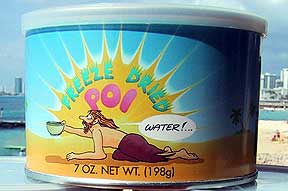
Today, taro is no longer limited to traditional uses.
It is used in breads, desserts, and specialty products, including poi-based foods such as muffins, bagels, and cheesecakes.
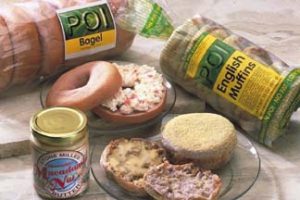
Research has shown that taro contributes a unique texture and moisture to baked goods, allowing for reduced fat content while maintaining richness.
This versatility has opened new markets and opportunities for farmers and producers.
The Future of Taro in Hawaiʻi
Taro production continues to grow, but it remains a small-scale industry relative to demand.
Community-based farming, cooperative efforts, and value-added products are all part of the path forward.
For many, the future of taro is not just economic — it is cultural.
Growing kalo sustains not only the land, but also the traditions, relationships, and identity of the Hawaiian people.
(Re-published with permission of the author, Jack Kelly.)

I want to find a way to buy poi and get it to the mainland. Texas to be more actual.
Thanks
Diane
May I have information to buy taro leaf & ti leaf
from the farmers who wholesale this product to
the mainland (Oakland,CA) please. I ono for laulau.
I would like to buy taro root. Please let me know if I can get it from you, and if not, where I might order it.
Thank you.
I don’t know were you can buy that land
Great article, it re-inforces my believe that farmers and agriculturalists should begin the base or expand before anything else in the economy. I really enjoyed it, I found everything I needed through that my hits on HPC with google, and now can buy not only taro, but poi as well. It sounds like most of that beautiful land that is used isn’t for sale, I would love to live and grow their, did Maui ever get those acres nice and fertile or are they still dried up?
I live in central Florida. My land is friendly to kalo. I would like to learn how to get kalo roots to grow. I have several Hawaiian friends here. Could you be of help, please?
Sincerely,
Chuck
I am interested in getting some huli. the variety I am looking for is piialii. if you have some or know of where I would be able to get some please e-mail me back with attention to kalo. I live on Oahu and will be willing to drive any where to pick up.. alohas
I own the Taro and Ti website – <a href=”http://taroandti.com/”>http://taroandti.com/</a> – I don’t sell any taro currently but am acting as an information repository and am working on compiling an exhaustive collection myself, however there is some trading, sharing and selling occurring amongst members on my Yahoo Group – <a href=”http://tech.groups.yahoo.com/group/taro-and-ti/”>http://tech.groups.yahoo.com/group/taro-and-ti/</a>
Be well,
Mike
I would love to have poi ship to El Paso,Texas I really miss my poi and also the taro leaf for Laulau or even stew luau. if it is possible please email me ASAP! You can take me out of the island but you can’t take my poi!
Much Mahalo Nui Loa.
Aloha, Clyde —
We no longer sell poi on this website. Haven’t made it, or sold it, since 2002.
There is another page on this site with information about where you can buy poi. I’m afraid it’s difficult to do so, and you will need to be fairly resourceful if you want poi or taro leaf in El Paso.
Just wanted you to know that your posting (particularly as you’ve chosen to hide your e-mail address) will not result in anyone contacting you about buying poi or taro leaves.
Auwe…
i need taro leaf in central oregon cant find nowhere
aloha, trying to find an easy way for my old auntie to pound poi. are there any automatic poi pounding devices/machines that you know of?
mahalo
jessica
A Cuisinart food processor should do the trick.
Peel the raw taro (don’t forget to wear gloves!), and then cut into cubes that are roughly the same size. Steam or pressure cook the cubes, and then run the cooked taro cubes through the food processor.
Hope this helps. Please post the results here when you have a chance. Mahalo.
I am looking to buy taro flour to use in baking. At the Polynesian Cultural Center we had Taro rolls and they were so good. Do you know of any commercial sources of flour? Thanks. Cindy.
does any one know the contact to order waipio poi in hawaii…thanks
i live up in vegas and like make some lau lau.can you send up some taro leaves and t leaves. if you do how do i go about it?
Hey Keola,
I live up in northern Ca. Fremont. And over here our Asian Markets(Lion’s, 99 Ranch, and Marina) carry taro leaves. Don’t know where they come from but the laulau’s are “ono”. Can’t find Ti leaves though. So i’m growing my own. so far i got nine healthy plants of Ti growing very close to my house. Maybe U can try asking your asian markets to carry them? Oh yeah. The ones over here is fresh too. Not frozen. Good Luck.
I have been growing taro here in Cairns, Tropical Noth Queensland and look forward to the day that all tropical areas have their home and commercial crops booming and that the demand is there and beyond.
Aloha,
I live on Oahu and am looking for a place where i can buy Kalo or huli to plant taro in my yard. I am looking to buy a dryland eating variety.
Please let me know where i may be able to purchase.
Mahalo Nui
Aloha,
I live in Waianae and I have a backyard which I have planted a dry land Kalo. I had asked my neighbor of my intrest to plant. He works with Ka’ala farms which is a cultural and educational learning center. I planted in March and as of today my kalo has grow to approx. 5′. I am 5’6″ tall. The kalo will soon be harvested. I look forward to re-planting. And possibly moving my Kalo to the back field. I others who try to grow kalo on the westside, water is my problem. If anyone knows how I can find other resources to water, your help will be much appreciated.
Mahalo 🙂
Aloha,
I live in Kaneohe and teach in Kailua. I am also looking for a source for a few huli so that I might start growing taro in our school’s garden and/or in my back yard.
Mahalo
I would like to try grow taro here in South Central Texas. Do you know where I can get it to plant? I miss my poi and so far can only find taro in Houston.I found taro root (not sure what type) at 99 Ranch Market in West Houston, Tx. I’ve not found a place to buy it where we live near San Antonio. Anyhow, I made my own sore poi. My husband and children do not like sore kind so next time will just put up after processing.
May I have information to buy taro leaf
from the farmers or produce companies who wholesale this product to
the mainland. San Francisco, East Bay, Oakland, Richmond, Berkeley, CA, please. I like make choke laulau, and luau stew, Freez’em and grind when I hungry.
I’ll be anxiously awaiting your reply!
Mahalo!
Curious as to where I could buy a poi grinder.
We just moved here from the Big Island and miss our kalo! There is a variety of kalo that grows wild here near streams and wet areas however I believe it to be an asian variety. The stems are only a little purple near the very top near the leaf. The roots don’t look very big and are white inside. Do you think this variety will make good lu’au and poi? Also, is there anyway we could get a couple different varieties shipped from Hawaii to Florida?
Mahalo
My name is Lani, and I am assisting the owner of Hawaii Taro Farm who currently has approximately 2,000 pounds of dry taro per week available. We are looking for wholesale buyers. If you know of someone interested, please contact me. We currently are selling taro at $1.50 per lb. in 50 lb. bags. Each taro weighs approx. 6 lbs.
Mahalo for your assistance,
Lani Stout
Executive Assistant
(808) 270-1094
Awesome webpage!
I am interested in growing some dryland taro. Would you know where I can buy huli, or corms for propagation?
I live in Kula, Maui and have a small farm.
Aloha,
Brandon
this is my correct email address….last one said yahool.com
Aloha I’m looking for two or three best type dry land taro to grow. Any suggestions where to find in Kaua’i. Of course for home grown around my house as I cannot find enough land to mass produce. Appreciate any help.
Very good article
Aloha Afa
1. any place in SF Bay Area to buy fresh poi?
2. How can I get some purple tyro starts?
My husband and I would like to work as volunteers in a taro farm for one month. The only request would be that it has to be with a community or family that uses the Hawaiian Language in their daily life, so we can get immersed in the original Hawaiian language an culture. Is there such a place? We are residents of Kailua Kona but are actually from Brazil. Mahalo!
Are we able to buy taro tubers and sent to the mainland (Georgia) to plant in containers? (To Make Poi) If so, do you have instructions on how to grow it in containers and how much tuber would it take to make a pound of poi?
Thanks for help and all that you guys are doing to keep the poi coming.
I work with a farmer on Kauai, who has more taro than he can sell. he sells for $1.50lbs, do you know any one interested in purchasing some. Thank you Tom
Tom, I am interested in buying kalo at that price. Respond to my email and hopefully we can work something out.
Hello Tom,
Does the Kauai farmer still have huli for sell as well? if so what variety does he sell? I may be interested also provide cost. I live on oahu.
Looking for taro to buy. Mahalo
Tom, I am also interested in purchasing taro for that price as well. Do you also know any where I could purchase the Taro leaves for a reasonable price?
I am interested to send Taro from O’ahu
to Knoxville Tn,could I get cost to send bout half dozen Taro there, Mahalo nui.
Koukalaka Kekaha.
Hi All,
I have plants Taro and I will sell all my products and I am from Indonesia. if you interesting please email to me :
[email protected]
our inquiry…
1. dried trao stem,
2. peel slin
3. moisture contain : 16%
4. packing : vacuum packing 10kg and 20kg
5. q’ty : 14 ton per month
6. delivery : CNF Korean sea port
7. payment : an irrevocable at sight L/C