
By Stacy Yuen Hernandez

 Someone once described poi as “a gray, nebulous blob of nothingness.”
The stigma surrounding poi has made it one of the most misunderstood foods of all. Luaus geared toward visitors often serve poi in tiny white paper cups, almost as though to warn first-timers: “Try it, but you probably won’t like it.” A friend visiting from New York, encouraged to taste poi for the first time, lightly touched the tip of a spoon to her tongue, turned up her nose, and exclaimed, “I don’t like it! It tastes like Elmer’s glue!” I was taken aback, of course, and shot back, “Oh, I didn’t know you’d eaten Elmer’s glue!”
Our naïve friends and relatives are not the only ones to put down poi. In the 18th century, when Captain Cook first tasted it, he described it as “a taro pudding” that, because of its sourness, seemed disagreeable to him. More than 200 years later, Hawaiʻi-born actress Kelly Preston took a very different view, proudly praising poi on the David Letterman Show and introducing the purple paste to a national audience. Her public defense of poi was unusual. More often, people scrunch their noses when poi comes up in conversation.
Locals who grew up with poi and love it learn to defend it passionately, taking it personally when someone criticizes it unfairly. Yet the long history of poi confirms that this Hawaiian staff of life has a spotless reputation. One would be hard-pressed to think of a more benevolent, nourishing, and non-offensive food.
From Kalo to Poi
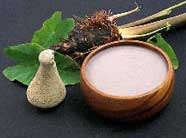 Taro was brought to Hawaiʻi by Polynesians in double-hulled sailing canoes, perhaps as long ago as A.D. 450. Taro, Colocasia esculenta, is known in Hawaiian as kalo. Whatever you call it, this perennial herb is one of the oldest cultivated crops in the world.
In ancient Hawaiʻi, the cultivation of taro was associated with Kāne, procreator and life-giver, provider of water and sun. Only men could plant, harvest, and pound taro. Women cultivated other crops, such as sweet potato, and are said to have eaten 10 to 15 pounds of poi a day.
When poi was on the table, people were not to argue or speak in anger. To Hawaiians, both before and after Captain Cook’s arrival in 1778, poi was not just a staple food, but a sacred one. Its significance in Hawaiian culture is profound.
In the journal of Polynesian cultural history, Poi Making, Hawaiian historian Mary Kawena Pukui described that significance this way: “Among my people, a child learned to pound poi at the age of eight, and it was the custom that each beginner ate every bit of the first batch he or she pounded. . . . My hair was coiled up and pinned securely so that there was no danger of getting a strand of it in the poi. We both turned out a smooth batch, which my aunt blessed (pule kahukahu) before we ate.”
The Sacred Place of Taro
This sacredness is also reflected in Hawaiian mythology, where taro is believed to have the greatest life force of all foods. The god Wākea, the sky father, and his daughter Hoʻohōkūkalani, child of Papa the earth mother, had a child named Hāloanaka, “quivering long stalk.” The infant was stillborn, and from the place where he was buried grew the first kalo plant. Hāloanaka’s younger brother, also named Hāloa, became the ancestor of the Hawaiian people. In this way, taro was the older brother and man the younger, both children of the same parents. Being firstborn, taro was considered superior even to man himself.
Poi Around the World, but Best Known in Hawaiʻi

Taro is grown in 65 countries around the world and is eaten throughout Asia, as well as in Africa and India. All taro belongs to the same genus and species, but there are many varieties. Hawaiians did not limit themselves to any single variety when making poi. It is said that for more than a century before the arrival of foreigners, Hawaiians cultivated about 200 varieties of wetland and dryland taro.
Several varieties had such prized flavor and color that they were reserved for chiefs. Poi made from pink taro was served only to the aliʻi, while the common people made do with coarser bluish poi made from white taro. Over time, however, cultivation of the rarer varieties decreased. One reason is that around 1870, Chinese growers entered the taro market and began producing it on a large scale, selecting varieties that yielded heavily and matured early. Still, regardless of the variety, ancient Hawaiians used the same process to make poi.
How Poi Was Made
The taro corm, or tuber, was baked or steamed in underground ovens. It was then mashed and mixed with water to make poi. The process evolved over time. After the arrival of Westerners, taro was often boiled in pots over wood fires. Once cooked, children helped pull off the outer skin, cooling their fingers in water as they worked. The taro was then peeled with sharpened ʻopihi shells. Men pounded the poi, and it was stored while still firm; water was added before serving.
Today, state-of-the-art stainless steel poi mills can produce 1,000 pounds of poi every six minutes. Traditionally, Hawaiians stored poi in large calabashes covered with water to keep a hardened crust from forming on top. Long ago, customers lined up outside poi mills with their own calabash or muslin bag to pick up poi, or had it delivered by horse-drawn cart.
The first poi entrepreneur was Annie Kamakakaulani, who began selling poi from her Mānoa home in 1897. She marketed her homemade poi to local buyers and to customers in Manila, Vancouver, and San Francisco, packaging it in sterilized airtight glass jars. Poi buyers also remember purchasing it in cloth bags or wooden kegs.
As the years passed, buying poi became more convenient. Around 1948, poi became available in grocery stores thanks to the invention of the plastic bag. In 1955, it appeared in 8-ounce cartons, similar to cottage cheese tubs. Today, poi even comes in handy 4-ounce squeeze tubes, so you can have a shot of poi at your desk or use it as a quick source of energy on a long run.
How to Eat Poi
There are several ways to eat poi. Some people use a fork, twirling the sticky substance around the utensil, while many use a spoon. But according to Mary Kawena Pukui, who wrote about her childhood in Kaʻū, the proper way to eat poi is with two fingers. Three fingers were considered gluttony.
“The index and middle fingers should be held tightly together and should not be inserted into the poi above the first joint. The fingers are rotated two times and the lump that adheres to them is lifted to the mouth. Never draw the fingers through the poi. When two people are sharing the same poi bowl, one must wait until the other has lifted his hand before inserting his own,” she wrote.
Traditionally, poi was eaten plain, without sugar on top and without being mixed into lomi lomi salmon. But by 1925, poi had become a breakfast item at the Moana Hotel, served with cream and honey. That same year, a newspaper article reported it as a remedy for seasickness and hangovers. Soon after Hawaiʻi became a U.S. territory, the average Hawaiian family consumed about 30 pounds of poi a week, costing about $1. Prince Kūhiō spared no expense when it came to poi; while living in Washington, D.C. as a territorial delegate, he had poi shipped to him weekly.
Poi Quality, Shortages, and Health History
In the early 1940s, Hawaiʻi faced a problem with substandard poi. Governor Stainback addressed it by establishing poi quality standards to control excessive watering down, and a full-time poi inspector was hired to maintain quality control. At one point, a city ordinance condemned all poi with less than 30 percent solid matter as unfit for human consumption.
Then there were the shortages, also part of Hawaiian history. A poi shortage struck in 1946, and many Mormon families on Oʻahu worked together nights and weekends to produce enough poi for themselves. In 1992, Hurricane Iniki devastated taro crops on Kauaʻi, where two-thirds of the state’s taro supply was grown. Other shortages throughout Hawaiian history stemmed from high demand and low supply, especially during the summer party season, as well as labor shortages in the taro industry.
In 1965, a State Taro Conference convened to discuss the taro industry. Doctors, nutritionists, and government officials attended, and one topic was poi as a baby and health food. A New York professor suggested poi as a substitute for infants and children with allergies to cereals. It was also discussed in connection with allergy-related conditions such as asthma, eczema, diarrhea, and gastrointestinal diseases. The same professor even suggested improving marketability by developing poi in other colors.
The 1965 conference also led to a study on island babies to determine whether poi was a good baby food. Over the years, poi gained a reputation as a lifesaver for several children with severe food allergies. In 1966, an Arizona infant named Teresa Mary Morrison reportedly survived a rare digestive difficulty by eating poi after other foods would not stay down. In 1975, a New York toddler named Ian House, reportedly allergic to nearly all foods except mother’s milk and poi, depended on freeze-dried poi rushed from Hawaiʻi.
Poi’s Reputation Deserves Better
There is no doubt that poi has long been valued as a nourishing food. It is an excellent source of fiber and vitamins C and B1, as well as potassium, magnesium, and iron. It is also relatively low in calories. One cup of ready-to-eat poi has about 120 calories, compared with roughly 250 calories in a cup of cooked rice.
So is there really anything bad to say about poi? Hardly. Songs have been written about it, and poi has taken on a certain whimsy in the entertainment world. Academy Award-winning songwriter Harry Owens, best known for Sweet Leilani, recorded a 1940 song called Poi, My Boy, Will Make a Man of You, a tribute to the purple paste. Elvis sang of a fellow named Ito in Blue Hawaii, with lyrics by Bennett & Tepper: “Ito is an eating boy, he never get enough from fish and poi.”
If Ito only knew today’s poi products, he might never stop eating. Poi is no longer used only as a staple alongside fish or laulau. There is poi ice cream, poi English muffins, poi bagels, poi cookies, kiwi-flavored poi, poi cheesecake, and even poi dog biscuits for your poi dog. The possibilities are nearly endless because poi is such an adaptable food.
So the next time someone asks, “What’s there to know about poi?” tell them the future of poi is every bit as exciting as its past — and that’s saying quite a lot.
(Original article published July 3, 2004, updated March 30, 2026)
doing a hawaiian theme dessert platter for school (LCB). looking for possible places to order on line from. am going to school in states (minn) will have to ship fed ex. any ideas
It’s bean a while since we sold poi, but at the time the best place to order luau supplies was http://www.luauking.com I just had a look at their website and some of the buttons come up with a “fatal error,” so I don’t know if they’re still active in shipping luau products to the mainland.
Hi I was wondering who that guy is modeling the poi in this article??
That guy is me. Ed Nishi.
I was born in Hawai’i and now live on the mainland. My 5 month old daughter did NOT start on baby cereal, but poi! I found taro root in our asian food store and make it fresh for her, she loves it! And I’m spreading the word to friends and family with new babies as well.
hay that is so cool i love poi
I would like more info on This product.
Troy
http://www.alohafriendsshop.com/ProductDetails.asp?ProductCode=poi
I just purchased some from here…
how much poi did hawaii consume in 2007…? jus somthing I wanna know
Aloha Kapena —
The most recent statistics are for 2006. The answer is: “Taro for processing totaled 4.4 million pounds in 2006, up 5% from 2005. The bulk of all processed taro, and taro in general, is made into poi.”
The National Agricultural Statistics Service of the United States Department of Agriculture releases an annual Hawaii Taro Production report on their website, in Adobe Acrobat Reader (PDF) format. To access the latest copy go to:
http://www.nass.usda.gov/hi/vegetble/taro.pdf
Hope this information helps!
i have to mix 20 lbs of frozen poi for an event we are sponsoring. never mixed this much. should I take out of frige, defrost and mix in small batches? Help!!!! mahalo
For those of us who have a little kalo garden, what do you recommend for an inexpensive poi grinder? I’ve priced poi pounders at about $500 – a future purchase for certain, but twixt now and then would like to produce a very modest amount of poi for myself and family. I’m about to harvest some poi kalo and would like to make poi from them if I can. Suggestions?
I want to know about hawaiian familey culture for a class I have. Can anyone help?! my e-mail is [email protected]
Aloha,
My friends baby has failure to thrive. I have no idea how to prepare the poi so she can give it to him. He isn’t gaining any weight and is 6 weeks. He needs Poi. Can you tell me how to prepare the poi for him, please.
Mahalo & aloha,
Diana
Hi, Diana —
Where are you located? If you’re in Hawaii, almost anyone could help you prepare poi. Have you asked your child’s paediatrician or nurse?
If you’re on the mainland, where are you obtaining your poi?
Hope this helps,
Mahalo,
Craig
That is awesome article about POI…Im excited…..And miss eating Poi.
I also read that taro is high in flourine which is why Hawaiians usually have very strong teeth!
i am doin a project on poi and i need to know some information to get an A plus
I live up in japan right now and wanted my mom to send me a bag of poi, she said hawaii was going through another taro shortage and they were only selling 2 bags per household. Is this true??? Help! I was coming home in a month and was planning on catching up on 2 years of poi missed..
I am a Californian who loves poi!
I would like to know how to defrost frozen poi. That is the only way I can get poi here in WA State.
Mahalo,
As indicated elsewhere on this site:
“Proper thawing means either thawing in a microwave with a layer of tap water over the surface of the frozen poi, or placing it in the refrigerator for a period between 12 to 24 hours, but no longer.”
Hope this helps.
I just received a shipment of poi and no instructions with itIFNQB. What do I do with the white bag and the brown bag.? Do I mix them together???
A white bag and a brown bag? What type of poi did you order?
Where did you order this poi? What do the contents of the two bags look like?
You should just receive a single bag of poi — there are lots of photos on this website of poi itself (a gorgeous purple paste). Poi looks the same in a bag as it does in a bowl.
I just wanna say being born nd raised on the big island of hawaii poi is a must have. Best straight out the bag. Poi with the lomi lomi salmon is the best. Poi was the first food i introduced to my 3 month old daughter nd she loves it. Its not for everyone but personaly u gda try it.
Cool! I’ve never heard of Poi before today.. I was reading about the history of Hawaii online and wanted to know more about Poi and that led me here. I want to try it now! It sounds very healthy.
Nice article….went home couple years ago, first thing was a stop a Tamashiro’s, wanted poke and poi….went to the cashier and she told me I could only purchase one bag of poi??? Huh, “poi shortage, gotta save fo everybody”….ok, I bought da big bag…..
68 an’ still eatin’ poi…….even if no can get fresh poi, only frozen kine…..iz all good!!
Made poi for the first time(and tasted it for the first time as well!). Mine turned out to be “two finger poi” (so I guess I did it right) Doesn’t look as purple as pictures I’ve seen, in fact, it looks grayish white — perhaps it’s the kind of Taro my store was offering? Anyway, I have to say it has an extremely mild flavor. It definitely won’t clash with any other foods served! I served it with Hawaiian marinated pork, Hawaiian beets, and pineapple upside-down cake.
how to make frozen poi?
To make frozen poi? Put a bag of fresh poi in the freezer. Presto! Frozen poi. The trick is how to thaw it. Instructions are contained on this website.
My younger son, now 48, thrived on poi the first months of his life. We were lucky to be able to get a case of it in Philadelphia.
We need to get it again. Any suggestions? Now living in the East Bay area, but another son could also pick it up in Santa Cruz.